
The Connecticut Inmate Population
Connecticut is a unified correctional state. The Connecticut Department of Correction explains that county jails and state prisons were unified under one state department in 1968, and the DOC FAQ says both jails holding pretrial offenders and prisons incarcerating sentenced offenders come under the Department of Correction. That statewide structure is the central fact behind Connecticut inmate population research: a person may be accused, awaiting court, sentenced, transferred, or housed for classification reasons, but the primary custody lookup is often the same CT DOC system.
That unified model also changes how the word jail should be read in Connecticut. In many states, a county inmate population means a sheriff's jail roster, one county detention center, and one local booking counter. In Connecticut, the same search may involve a city police holding room, a Superior Court appearance, a CT DOC correctional center, a correctional institution, or a federal or immigration system. The Connecticut inmate population therefore has to be read by custody stage first. A new arrest can be local for a short time, but a person who stays in custody commonly moves into the statewide DOC system.
The statewide agency context is visible on the Connecticut Department of Correction home page, which identifies CT DOC as the public starting point for correctional services.
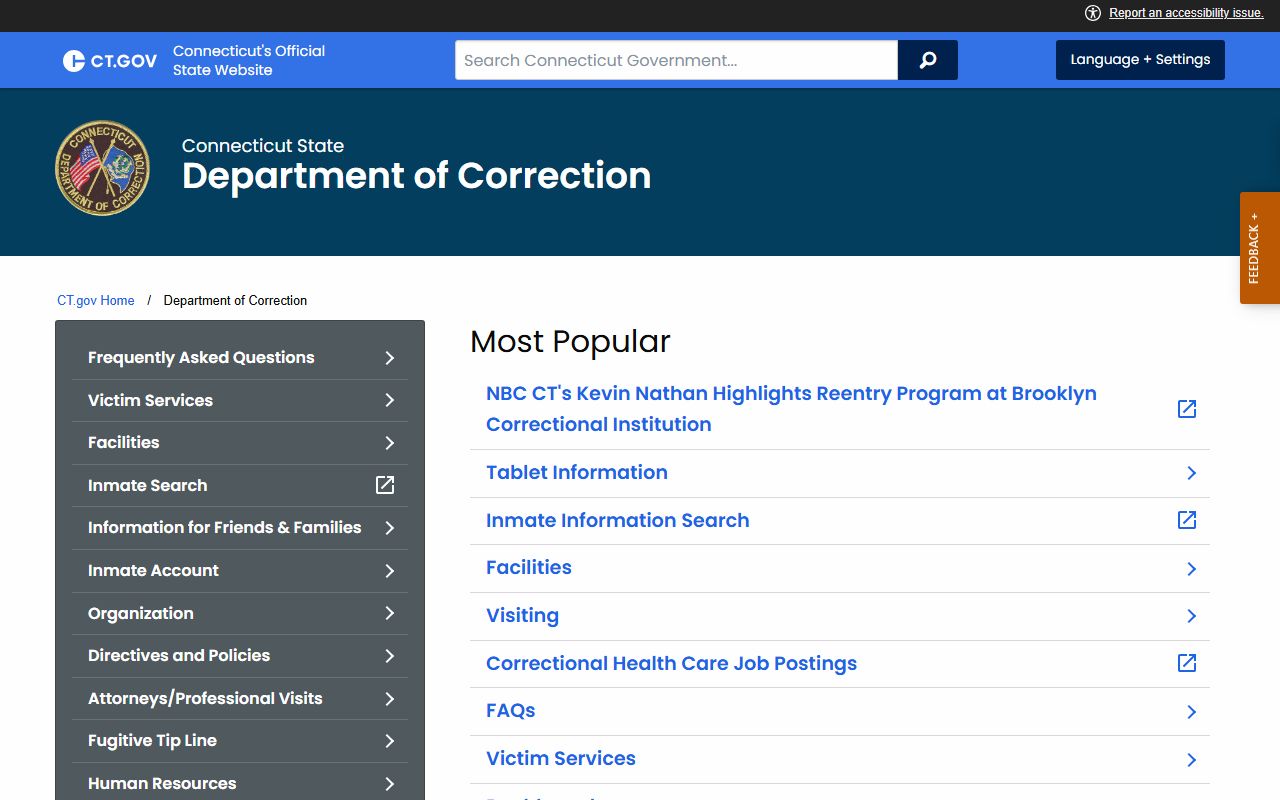
That state-level DOC identity is why the Connecticut inmate population has to be explained through one unified correctional system instead of separate county jail systems.
As of July 6, 2026, the Connecticut Open Data daily facility population dataset reported 10,736 people in CT DOC correctional facilities statewide. The same daily snapshot counted 7,322 sentenced-status people and 3,414 accused or other-status people. Because Connecticut reports the population by facility and status, the count reflects both prison and jail-style custody inside the unified system rather than a separate county-by-county sheriff roster total.
The accused or other-status count is important for readers who are trying to find someone after an arrest. Those people are not yet the same as sentenced prison inmates, but they can still appear in the statewide correctional population once they are in DOC custody. The sentenced count is different. It reflects people serving sentences in CT DOC institutions or centers, subject to classification, sentence credits, parole eligibility, detainers, and transfers. Both groups are part of the Connecticut inmate population in the daily dataset, so the search path should not begin with an assumption that jail and prison are separate systems.
Connecticut Inmate Population Statistics
The July 6, 2026 CT Open Data count is the controlling statewide population figure in the research. The DOC facility list includes active and closed correctional facilities, and the DOC FAQ states that the department has 18 correctional facilities, with five closed because of a 20-plus-year low in offender population. The daily population dataset listed active facility rows including Bridgeport CC, Brooklyn CI, Cheshire CI, Corrigan CI, Garner, Hartford CC, MacDougall, Manson YI, New Haven CC, Osborn CI, Robinson CI, Walker RC, Willard-Cybulski CI, and York CI.
Facility names in the daily data do not always match the public facility page title word for word. For example, MacDougall appears in the dataset while the public facility name is MacDougall-Walker Correctional Institution. Walker RC appears as a separate row in the population data, and Willard-Cybulski appears in daily counts even though public facility pages also preserve Cybulski and Willard naming. Those naming differences are normal in operational data. They should be reconciled against the DOC facility list instead of treated as missing facilities.
The daily source behind the headline count is the Connecticut correctional facility daily population dataset.
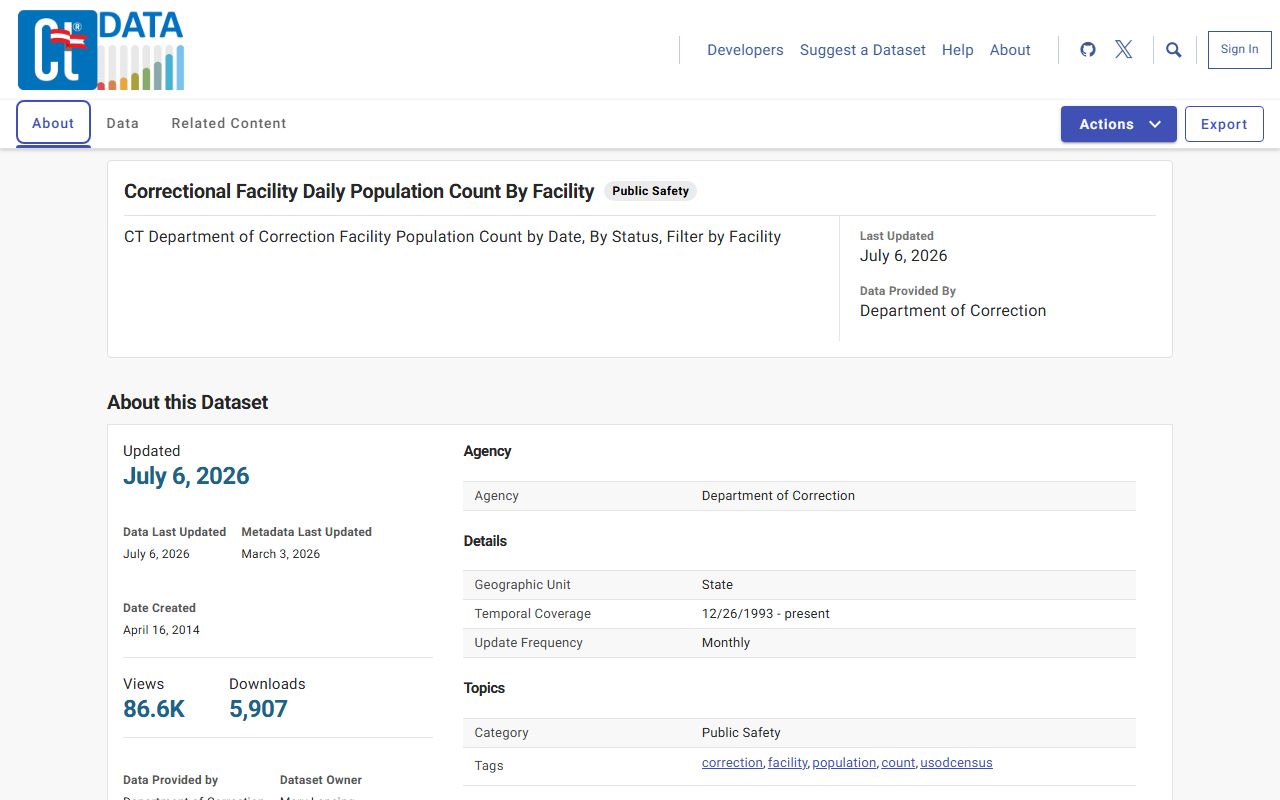
Because the dataset is facility-based, it supports the statewide count while preserving the accused and sentenced split used throughout this page.
| Measure | Figure | Source / Date |
|---|---|---|
| CT DOC correctional facility population | 10,736 | Connecticut Open Data daily facility population count, July 6, 2026 |
| Sentenced-status population | 7,322 | Connecticut Open Data daily facility population count, July 6, 2026 |
| Accused / other-status population | 3,414 | Connecticut Open Data daily facility population count, July 6, 2026 |
| Correctional facilities identified by DOC FAQ | 18 facilities, with five closed | CT DOC FAQ |
Population counts also vary by facility role. Bridgeport, Hartford, New Haven, and Corrigan operate as correctional centers with strong pretrial and court-service functions. Institutions such as Brooklyn, Osborn, Robinson, Garner, Cheshire, York, and MacDougall-Walker carry sentenced, classified, program, security, or specialized custody roles. York is the statewide women's institution, while Manson Youth Institution handles young male offenders. These differences explain why one Connecticut inmate search can involve a court-serving correctional center and another can involve a sentenced institution even when both records are visible through CT DOC.
Connecticut Inmate Population Trends
The recent trend is lower than the prior year but slightly higher than two years earlier. CT Open Data showed 11,167 people in CT DOC facilities on July 1, 2025 and 10,736 on July 6, 2026, a decline of 431 people, or about 3.9%. Compared with July 1, 2024, when the dataset showed 10,584 people, the July 6, 2026 count was up by 152 people, or about 1.4%. Short-term movement can reflect admissions, releases, court calendars, transfers, detainers, classification, and daily reporting timing.
The trend should be read with the as-of dates intact. A daily figure can change when courts are in session, when people are released, when a sentence starts, when a person is moved between facilities, or when a detainer changes the release path. The July 6, 2026 number is not a permanent annual average. It is a current public snapshot from a daily data source, while the monthly statistics archive gives a separate route for readers who need older reports and broader trend context.
The monthly reporting context is available through the CT DOC monthly statistics archive.
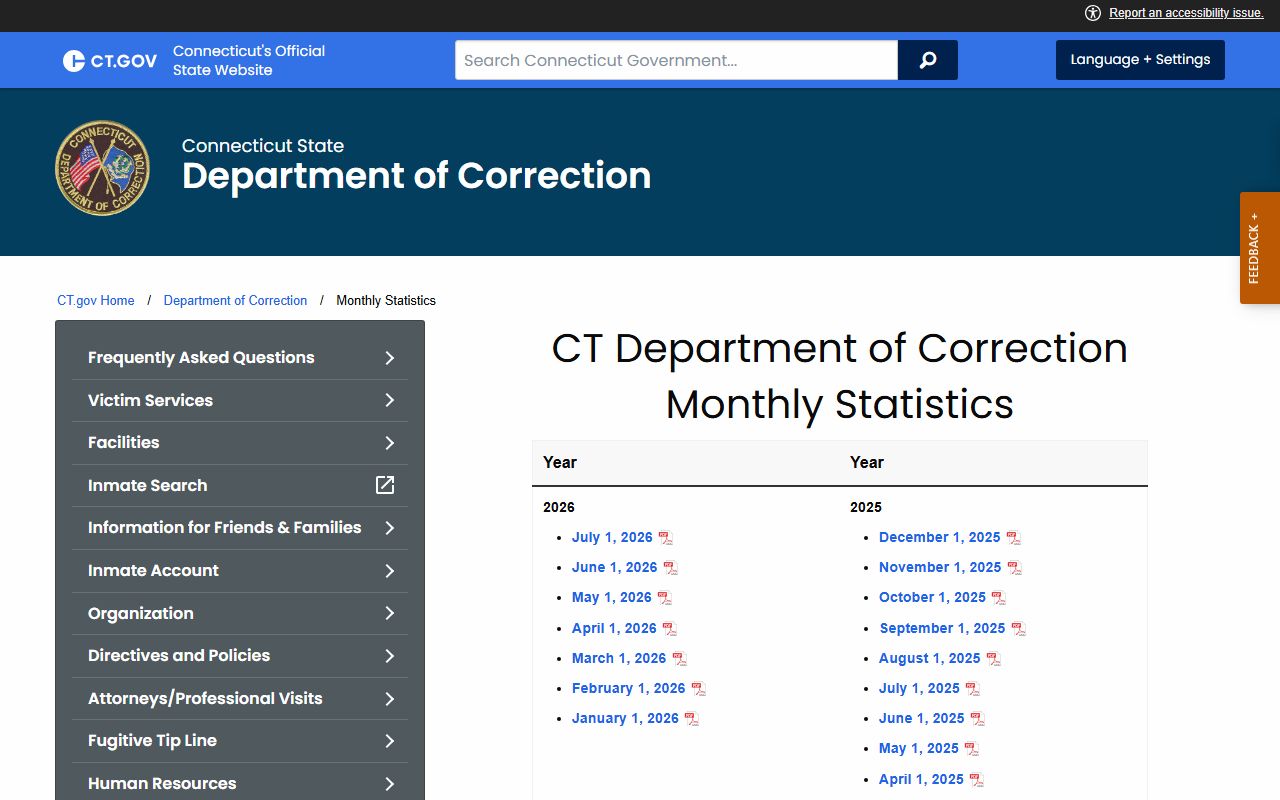
The monthly archive complements the daily dataset by giving readers a second official route for checking historical Connecticut inmate population reports.
| Date | CT DOC Facility Population | Notes |
|---|---|---|
| July 6, 2026 | 10,736 | Current daily snapshot in the statewide research |
| July 1, 2026 | 10,752 | Monthly-statistics comparison date |
| January 1, 2026 | 10,823 | Down 87 by July 6, 2026 |
| July 1, 2025 | 11,167 | Down 431 by July 6, 2026 |
| July 1, 2024 | 10,584 | Up 152 by July 6, 2026 |
Laws Governing Connecticut Inmate Records
Connecticut public-records access is grounded in the Connecticut Freedom of Information Act, Chapter 14 of the General Statutes. Conn. Gen. Stat. Section 1-200 defines public agencies and public records/files, and Conn. Gen. Stat. Section 1-210 states the general public-records access rule, subject to exemptions. DOC Administrative Directive 4.4 governs access to inmate information and frames what DOC may disclose publicly.
The practical effect is that a public custody lookup is not the same as a right to every institutional record. A CT DOC inmate search may show current public custody information, while incident reports, correspondence, policies, aggregate data, or other DOC records may require a formal FOI request. Police reports and arrest materials remain with the arresting police agency. Court records remain with the Connecticut Judicial Branch. Medical, security-sensitive, juvenile, Youthful Offender, sealed, and pending-investigation material can be restricted even when a basic custody record is public.
Key sources:
Conn. Gen. Stat. Chapter 14 - Connecticut's Freedom of Information Act.
Connecticut Freedom of Information Commission - statewide FOI enforcement and guidance.
CT DOC External Affairs Freedom of Information - direct DOC public-records request route.
How to Search the Connecticut Inmate Population
The official statewide custody search is the CT DOC Inmate Information Search. The locator is for people currently incarcerated with CT DOC, is updated daily, and may change quickly. CT DOC says accused offenders are generally listed, but Youthful Offender records and offenders held for ICE are not included in the CT DOC search results. Use CT DOC first for state custody, then switch systems only when the facts point to police processing, court records, federal custody, immigration detention, or victim notification.
A no-result search should be handled methodically. Check spelling, try the first few letters of the last name, remove extra fields, and search by CT DOC inmate number if one is available from court, bond, mail, or prior custody paperwork. If the arrest happened the same day, the person may still be in police processing or court intake. If immigration custody is involved, CT DOC says ICE-held offenders are not included in CT DOC search results. If the case is federal, the BOP locator may not show a pretrial defendant until federal designation occurs.
For current state custody, the direct source is the CT DOC Inmate Information Search.
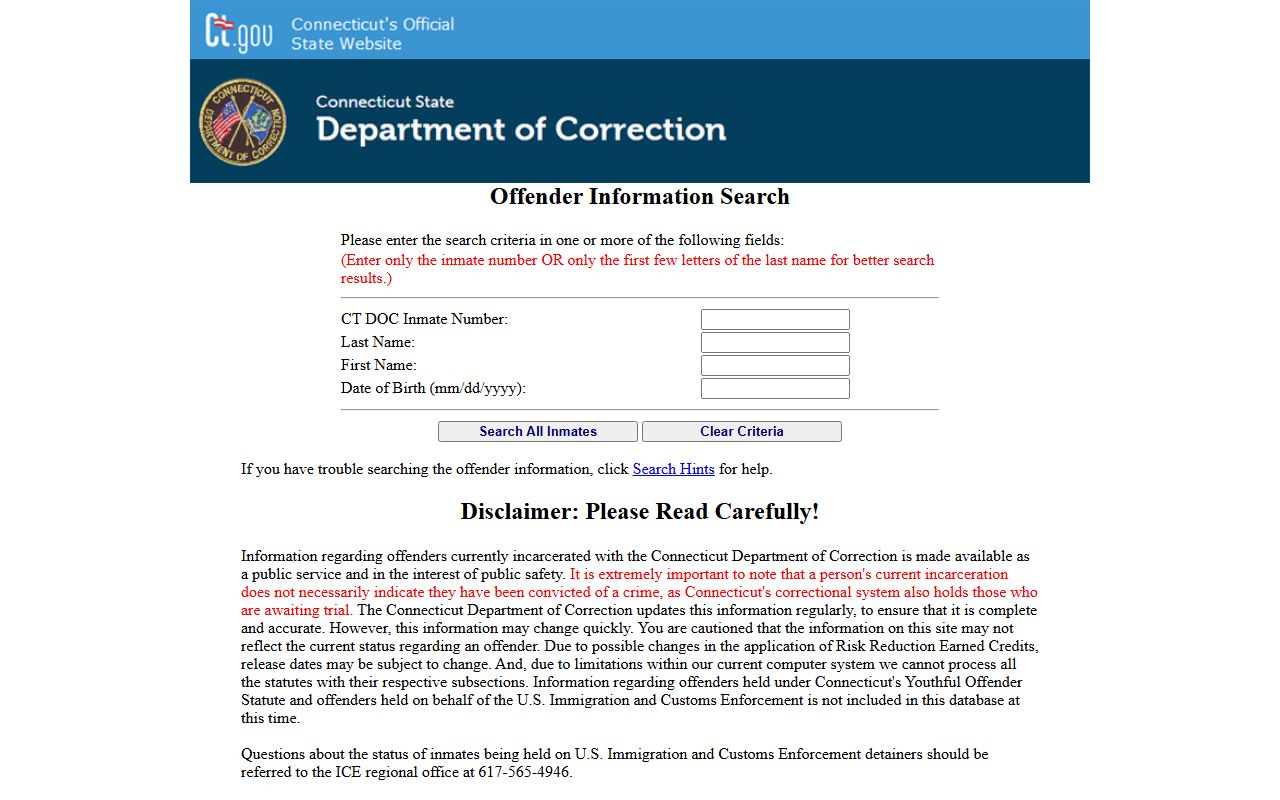
The locator screenshot reinforces the practical rule: start with CT DOC when the question is current Connecticut correctional custody.
- Open the CT DOC Inmate Information Search or CT.gov's Inmate Search service page.
- If the CT DOC inmate number is known, search by that number first.
- If the number is unknown, use the first few letters of the last name, then add first name or date of birth only if needed.
- For recent arrests not yet in DOC custody, use the Locality Directory to find the police or court context for the arresting area.
- For federal custody use the BOP locator; for immigration detention use ICE ODLS; for custody and court-event alerts use VINELink Connecticut.
Connecticut Inmate Search by Locality
Connecticut does not work like a county-sheriff jail state. Locality pages are still useful because arrest reports, police holding, court routes, and facility context vary by city or county folder. The statewide directory links every built locality route, including Bridgeport, Danbury, Hartford, New Haven, county folders, and other city sites, using the APEX_DOMAIN_TBD placeholder until the final domain exists.
The locality routes are especially useful for recent arrests. Bridgeport, Bristol, Danbury, East Hartford, Greenwich, Hamden, Hartford, Manchester, Meriden, Milford, New Britain, Norwalk, Stamford, Stratford, Waterbury, and West Haven all appear in the research with police holding or arrest-processing context. Those locations are not long-term county jails. They are the local layer that may have arrest reports, press releases, records counters, or initial booking information before a person is released, appears in court, or enters CT DOC custody.
State, Federal, ICE, Court, and VINELink Search
Use CT DOC for Connecticut's unified correctional custody. Use the Connecticut Judicial Branch criminal/motor vehicle case lookup hub for pending criminal and motor-vehicle cases, convictions, dockets, warrant or failure-to-appear resources, and daily court events. Use BOP for federal inmates from 1982 forward and FCI Danbury custody. Use ICE ODLS when the person is in immigration detention. Use VINELink Connecticut for custody and court-event notifications where supported; it is not the official DOC roster.
The systems should not be merged in the reader's mind. A Judicial Branch case record can show charges or a conviction without proving where the person is held today. A CT DOC custody record can show a location without showing the full court file. BOP and ICE are federal systems, so they do not replace the Connecticut Department of Correction locator. VINELink can be helpful for alerts, but it is a notification channel rather than the official statewide inmate population source.
Court status belongs with the Connecticut Judicial Branch criminal/motor vehicle lookup hub, not the custody locator.
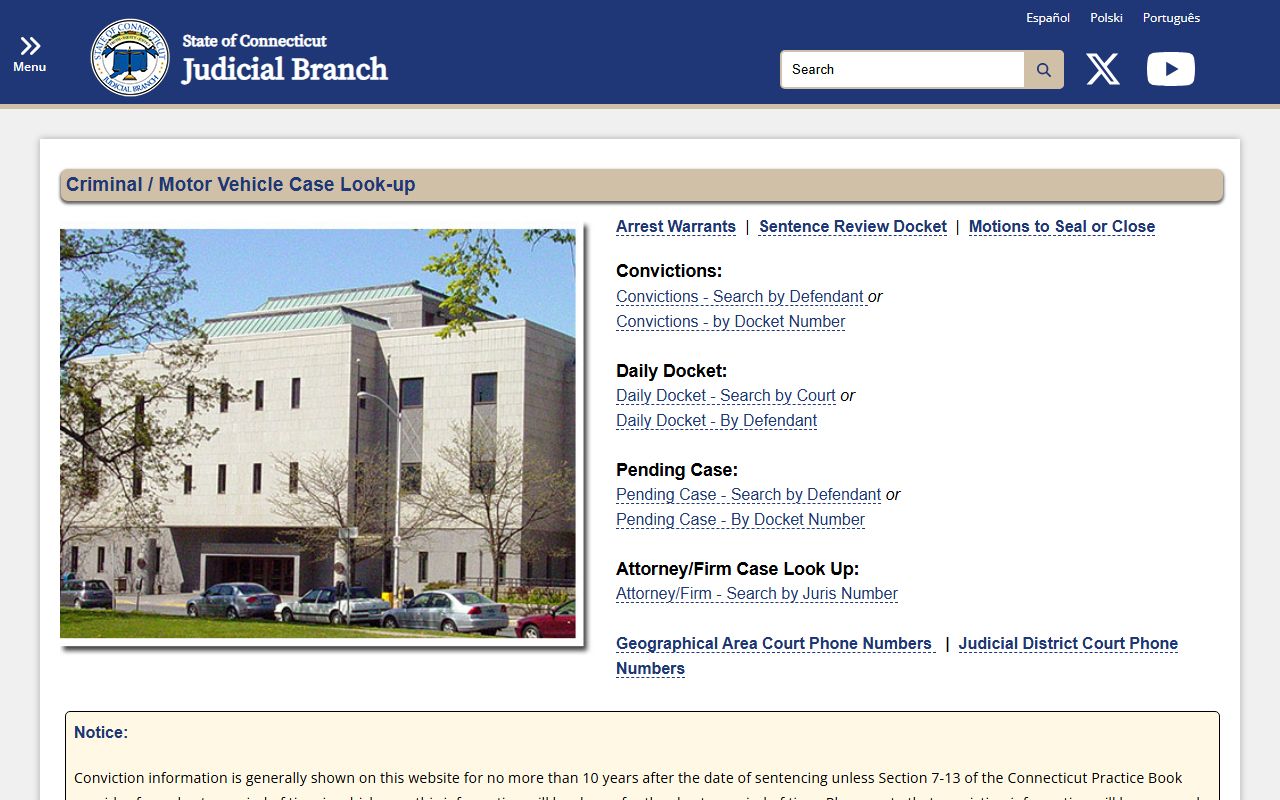
That court portal helps separate case status from the custody location shown by CT DOC.
Federal custody is checked through the Federal Bureau of Prisons inmate locator.
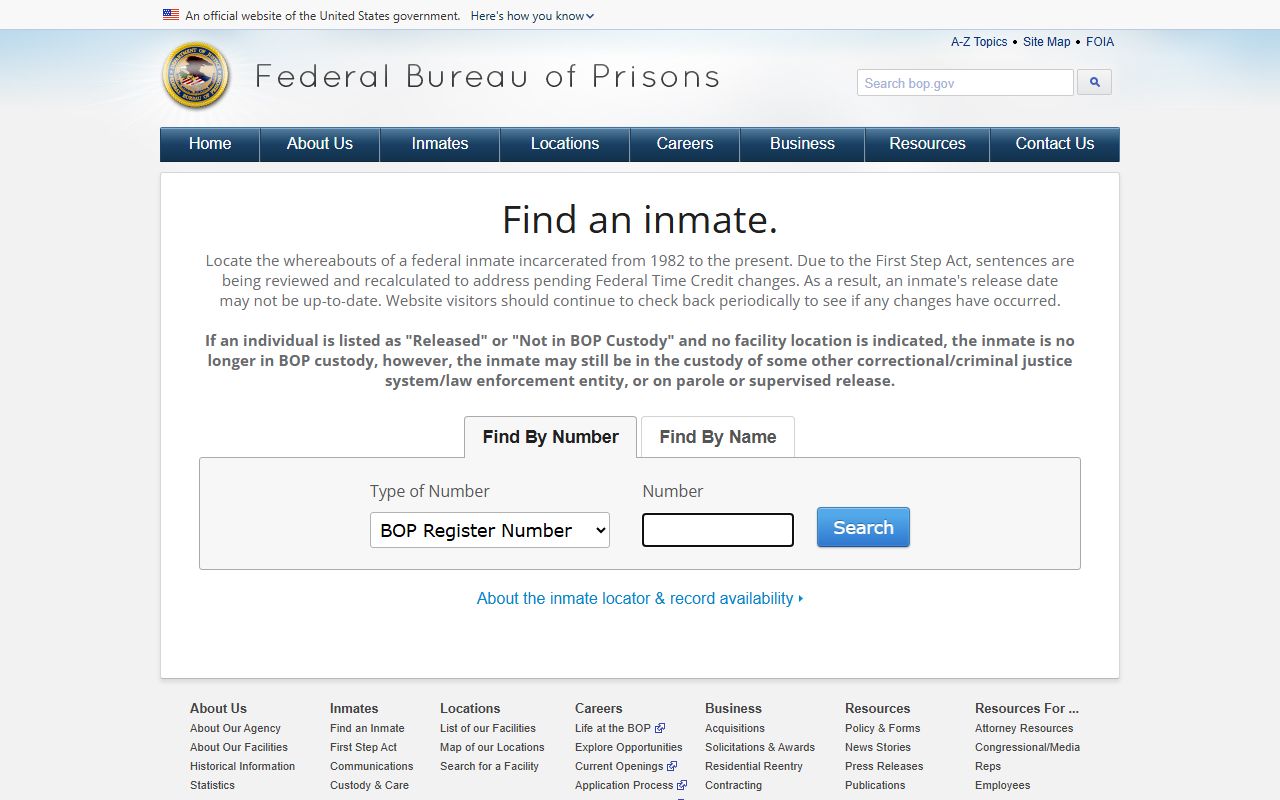
The BOP locator matters statewide because a Connecticut federal case may involve FCI Danbury or a federal facility outside Connecticut.
For notification rather than the official DOC roster, Connecticut users can use VINELink Connecticut.

VINELink supports alerts, while CT DOC remains the official statewide custody locator.
Connecticut Detention Facilities
The statewide facility roll-up includes CT DOC correctional centers and institutions, FCI Danbury, municipal police holding locations, court holding context, UConn Health's DOC medical-surgical ward, the REGIONS Community Residential Program at Hamden, and closed DOC facilities that still appear in official facility records. Covered rows link down to locality subdomains; uncovered rows show researched official source links without inventing a local site.
Covered does not always mean active in the same way. Some covered rows are active DOC prisons or correctional centers. Others are municipal police holding rooms, a court holding context, a federal BOP institution, a contracted community residential program, or a closed facility preserved by local research. Uncovered rows are still real facilities from the statewide research, but no sibling locality folder exists or the facility is closed or archived. The directory keeps those rows because people search old facility names from court papers, family notes, news reports, and older custody records.
The official statewide source for DOC facility names is the CT DOC facilities page.
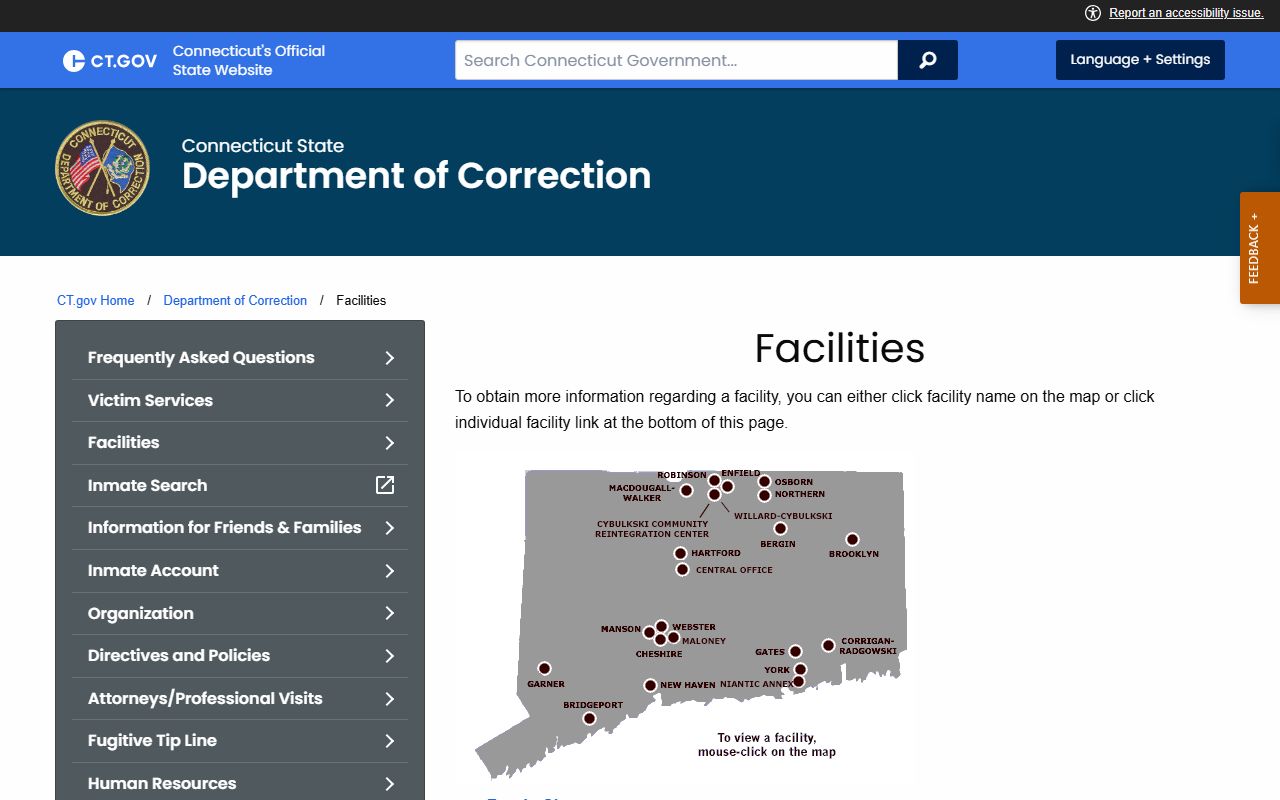
That facility list is the anchor for the statewide directory and for distinguishing active, covered, and closed DOC locations.
Connecticut Inmate Population FAQ
How big is the Connecticut inmate population?
As of July 6, 2026, Connecticut Open Data reported 10,736 people in CT DOC correctional facilities statewide, including 7,322 sentenced-status people and 3,414 accused or other-status people.
Why is CT DOC so important for a jail search?
Connecticut unified county jails and state prisons under one state department in 1968. That means many searches that would be county jail searches in other states are CT DOC searches in Connecticut.
Where do court records fit?
Court records answer a different question from custody records. CT DOC shows custody location and status; Connecticut Judicial Branch tools show case status, docket information, convictions, charges, and court events.
Does Connecticut have county jail rosters?
Connecticut does not use the county-sheriff jail model for long-term custody. City police may handle arrest processing, and locality pages explain those local routes, but the statewide CT DOC locator is usually the main custody search once a person remains in Connecticut correctional custody.
What if CT DOC shows no result?
Try fewer search fields, check spelling, and consider timing. The person may still be in police or court processing, may have a restricted Youthful Offender record, may be in ICE custody, or may be in federal custody outside the CT DOC system.
Public Record Search
Sponsored Results